Do You Need Full Mouth Reconstruction or Just a Few Fixes?

If you have been away from the dentist for a while, you already know something is not right. What you may not know is how much work you actually need. That question is harder to answer than most people expect, and it is what this article walks through.
The dividing line between targeted fixes and a full mouth reconstruction is not how many teeth look bad. It is whether your bite, your jaw joints, and the bone underneath are part of the problem. When the damage is confined and your bite is stable, a crown or two is usually enough. When grinding, shifting, or a misaligned bite is behind the damage, fixing one tooth at a time will not stop the pattern.
Dr. Thomas Sarko and the team at Sarko Dental Associates help Scottsdale patients sort this out every day. Call us at (480) 951-2782.
A crown cracks. A filling keeps coming loose. Most people treat these as separate problems, but they usually share the same cause. The signs that point toward reconstruction rather than a quick fix most often include:
When several of those show up together, fixing one tooth at a time won't stop the pattern. Full mouth reconstruction addresses what's actually driving the damage before any individual tooth gets worked on.
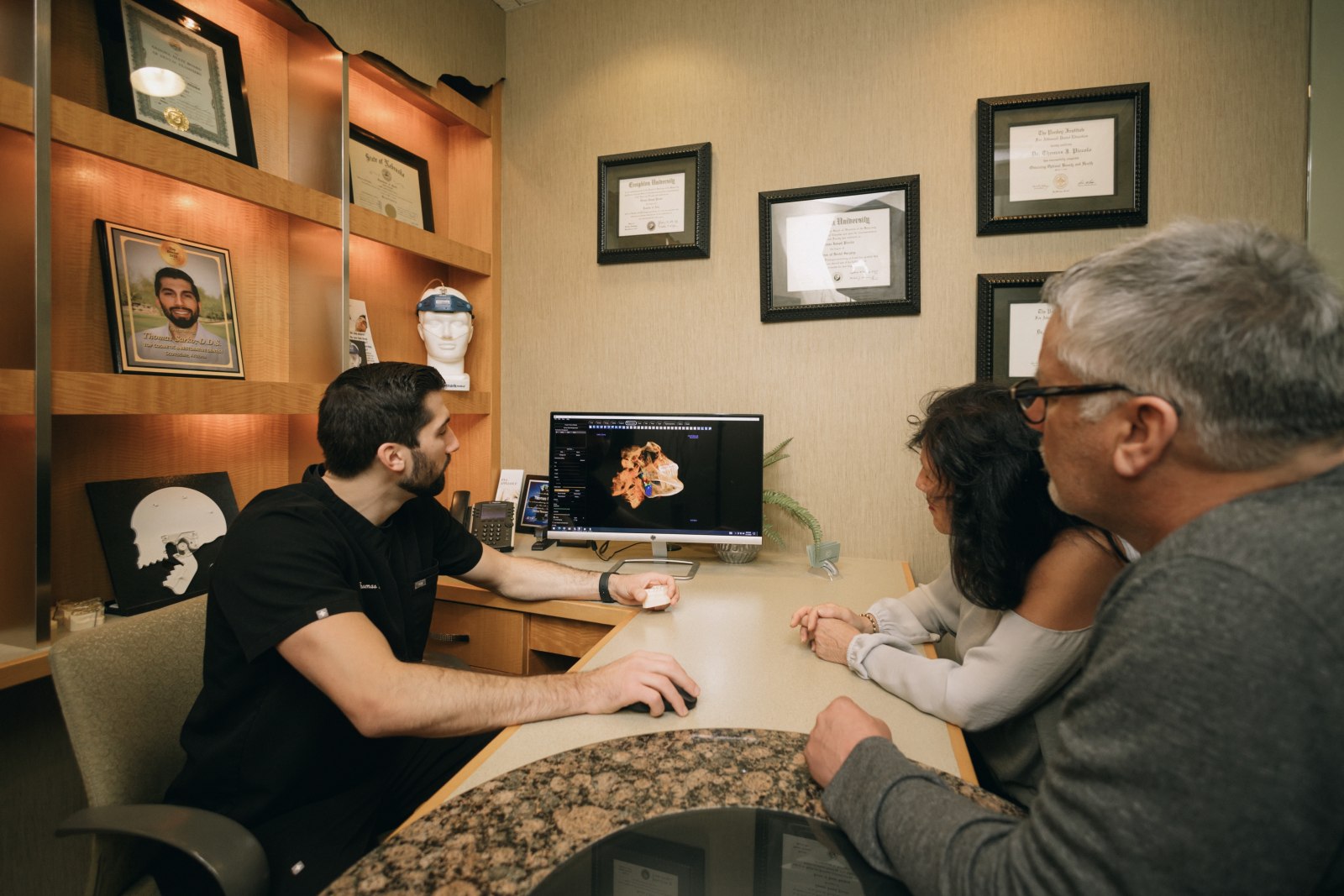
The appointment opens with your own photos and an intraoral scan, up on the monitor where you can see them. Dr. Sarko usually asks what you see and what you feel before saying much himself, because your answer often changes the conversation. We keep two intraoral scanners and cone beam 3D imaging on site, so when bone, joints, or implant planning come into play, we are not guessing at depth from a flat x-ray.
Plenty of people arrive asking for a cleaning and an exam with no particular goals in mind. That conversation usually surfaces the real goal. The plan should follow what matters to you, not a treatment menu.
The starting point is always the option that reaches your goal with as little dentistry as possible. From there we walk through the other paths that can work, with each trade-off explained clearly: what it costs, how long it takes, and what happens if you wait. Five dentists will give you five different plans, so what you should expect from any of them is reasoning you can follow.
On cosmetic cases especially, a drill never touches a tooth without a plan you have already seen. That often means a diagnostic wax-up from our lab, placed in your mouth as a preview, so you can see the proposed result before any enamel is reduced. If it is not what you pictured, we change course then, not after.
Not everyone worried about the state of their teeth needs an overhaul. Being pushed into more treatment than the situation calls for is one of the main reasons people stop going to the dentist at all.
When the problems are confined to a few teeth, targeted work is the right call. A couple of well-made crowns on teeth that are cracking. A veneer or two for a chip that has bothered you for a decade. A single implant for a missing tooth, without touching the teeth on either side.
Here is what we look for before we go that route:
When those boxes are checked, more dentistry is not better dentistry. And when a crown is the answer, we make the permanent one in our office while you wait. No temporary to break over a weekend, no second appointment to schedule.
Sometimes the most useful thing a dentist can tell you is that patching won't work. If the bite driving the damage never gets addressed, repairs fail one after another. One crown, then another, then another, and you keep coming back wondering why nothing lasts. The crowns aren't the problem. The bite forces are.
A full assessment changes the picture. When the bite, the bone, the gum tissue, and every tooth get looked at together, the plan is built around what's actually going on, not just what's most urgent right now. That's why we begin with a full exam and cleaning before anyone talks about rebuilding anything.
What surprises people most about reconstruction isn't the number of appointments. It's the pace, especially once implants are involved. Technology has advanced, but our biology hasn't. Bone heals on its own schedule, and we work within that rather than around it. We can sequence treatment so you're never left without function, and we can phase the work to fit your schedule and budget. What we won't do is rush healing and wonder why something failed.
Most full mouth plans can be broken into stages. The urgent problems get handled first: infection, pain, teeth that are actively breaking. The rest follows at a pace you can live with. We'll tell you which steps need to happen in order and which can wait without making things worse. If you'd like to talk it through with Dr. Thomas Sarko or Dr. Piccolo, reach out to our Scottsdale office or call (480) 951-2782.

Plenty of the people who call us haven't seen a dentist in years. Some, in over a decade. What kept them away often wasn't the drill or the cost. It was imagining the look on someone's face when they finally opened their mouth.
That feeling is more common than you think. The space between "I should have gone sooner" and "I'm ready now" is where we meet people, week after week. Nobody here is keeping score.
Our team has been together for years, so the faces don't change and neither does the answer: here's where we are, and here's what we can do about it. Dr. Thomas Sarko and Dr. Piccolo have spent their careers working with patients in all kinds of situations. That first visit is usually just an exam and a cleaning, with a real conversation about what you see and what matters to you.

Because the price follows the plan, and the plan requires seeing your mouth. Five dentists will give you five different plans, so a number over the phone would not tell you much. Once we look together, you get clear costs and timelines for each option before anything is decided.
We are out of network with all insurances. We file your claims and work to get you the reimbursement you are owed. What we do not do is let insurance guidelines decide what treatment we recommend. Most patients find the difference in out-of-pocket cost is smaller than they expected.
Sometimes that is exactly the right scope, and we will tell you so. Other times, front teeth chip or wear because of what is happening further back in the bite. We will show you exactly what is going on using your own scan. If the back teeth are the real story, we will walk you through what full mouth reconstruction actually involves.
It depends on what is involved. Cases without implants can often move faster than people expect. When implants are part of the plan, bone healing sets the pace, not the calendar. We sequence the work so you are never left without function, and we can phase treatment to fit your schedule and budget.
Yes, and that is often how we approach it. Infection, pain, and actively breaking teeth come first. The rest can follow at a pace that works for you. We will tell you which steps need to happen in sequence and which can wait without making things worse.
Knowing something isn't right is reason enough to come in. You don't need a diagnosis first.
We look at everything together, talk through what we find, and you leave with a clear picture of what's going on and what your options are. The answer might be a single filling, a dental crown, a set of veneers, or a full mouth reconstruction. Most patients land somewhere in between, and you'll know where you stand before anything starts.
When you're ready, Dr. Sarko and our team are at 8591 E Bell Rd., Suite 100 in Scottsdale. Call (480) 951-2782 and we'll take it from there.
Call (480) 951-2782 or request an appointment online to set up your first visit. We’ll be in touch soon.

